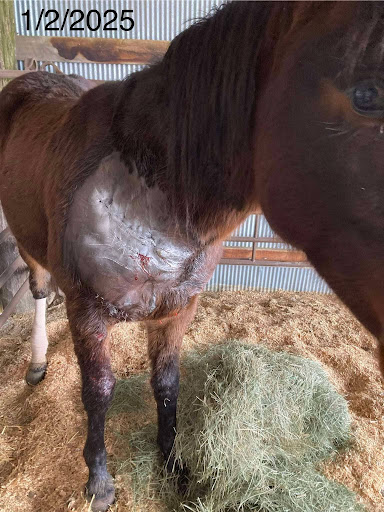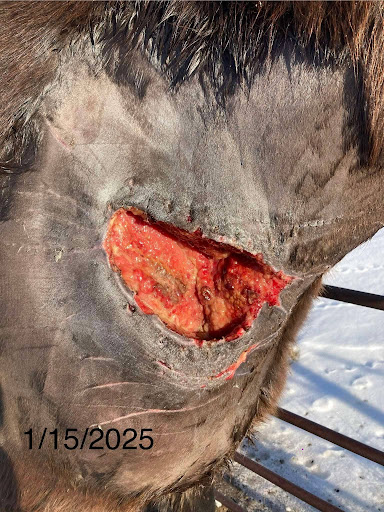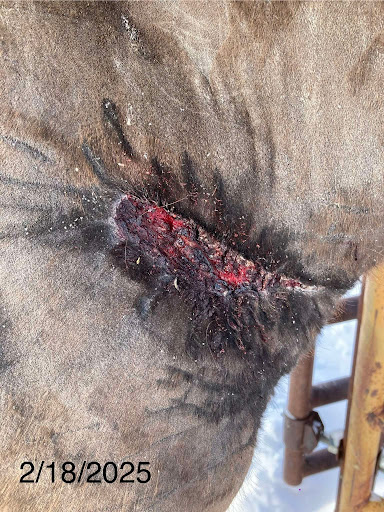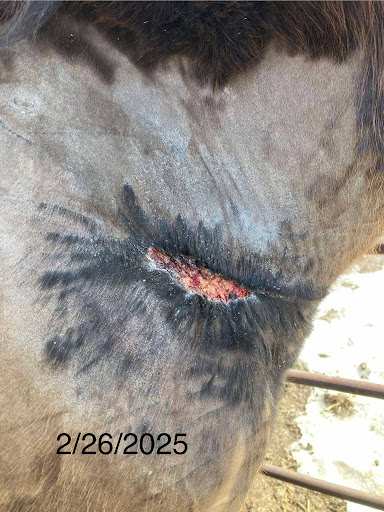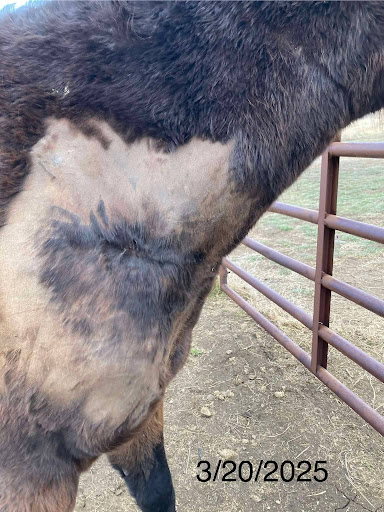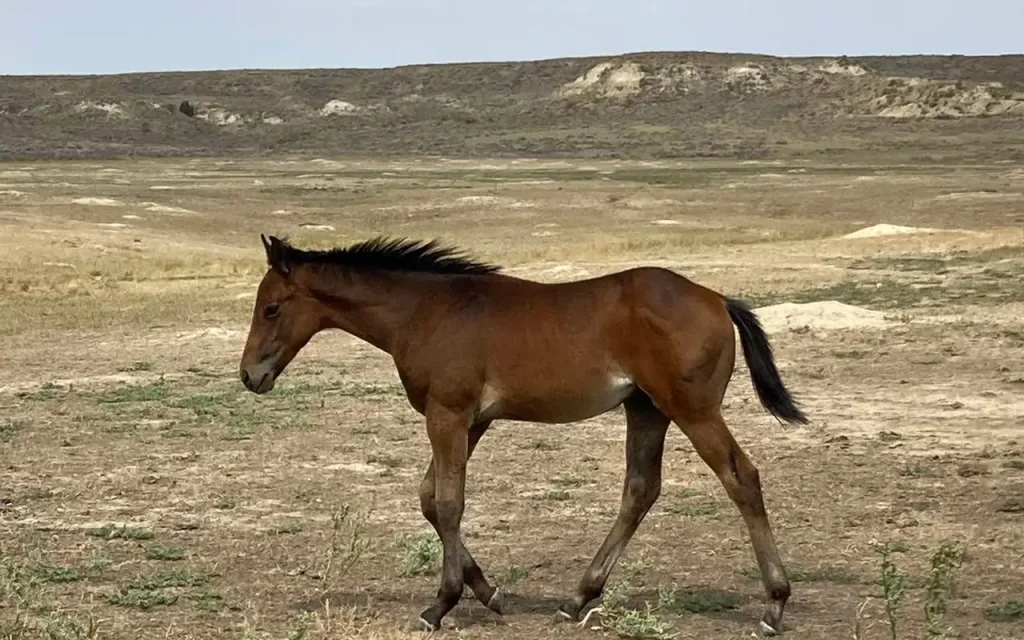
Recent concerns surrounding New World Screwworm have prompted veterinarians, livestock producers, horse owners, pet owners, and animal caretakers across the country to pay closer attention to wound management and animal health.
New World Screwworm (Cochliomyia hominivorax) is a parasitic fly whose larvae feed on living tissue. Female flies are attracted to open wounds and can lay eggs in cuts, abrasions, surgical sites, insect bites, and other openings. Once hatched, the larvae can cause significant tissue damage and require immediate veterinary intervention.
Unlike many common fly larvae that feed on dead tissue, screwworm larvae feed on healthy living tissue, making infestations a serious animal health concern.
While horses have received much of the recent attention, screwworms can affect a variety of warm-blooded animals, including:
- Horses
- Cattle
- Sheep
- Goats
- Swine
- Dogs
- Cats
- Wildlife
The Bigger Lesson: Every Wound Deserves Attention
While most wounds will never become a screwworm case, they still deserve prompt attention and monitoring. Whether it’s a scrape from fencing, a cut from rough terrain, a skin irritation, or an insect bite, proper wound management helps owners:- Monitor healing progress
- Maintain a clean wound environment
- Identify potential complications early
- Communicate changes to their veterinarian
- Support overall animal wellness
Why Wound Care Matters
Whether you care for horses, cattle, dogs, goats, sheep, or other animals, wounds are an unavoidable part of life. From fence scrapes and minor cuts to insect bites and skin irritations, animals encounter countless opportunities for skin damage throughout their lives. While many wounds are minor, the body’s recovery process is complex. Healthy circulation, proper tissue support, a clean wound environment, and consistent monitoring all play important roles in supporting the body’s natural recovery process. Animal owners who establish a proactive wound-care routine are often better equipped to identify problems early and maintain overall wellness.Supporting Recovery with MagnaWave PEMF
Wound care isn’t only about what happens on the surface. Recovery also depends on what is happening within the body. Many animal owners and practitioners use MagnaWave PEMF (Pulsed Electromagnetic Field) therapy as part of a broader wellness and recovery plan. MagnaWave PEMF is a non-invasive, drug-free technology that delivers electromagnetic pulses to the body to support cellular function and healthy circulation. Healthy circulation plays an important role in the body’s natural recovery process by helping deliver oxygen and nutrients where they are needed most. Because of this, many practitioners incorporate MagnaWave PEMF into recovery routines for animals following training, competition, injury, or other physical stressors. While MagnaWave PEMF is not a replacement for veterinary care, it is often used as a complementary wellness tool alongside proper wound management, veterinary guidance, nutrition, and other supportive care practices.Supporting Daily Wound Care with HydroWave™
HydroWave™ is MagnaWave’s topical wound spray formulated with bio-compatible, oxygen-infused silver technology designed to support a clean wound environment. It is commonly used on cuts, abrasions, minor burns, irritated skin, and other everyday wound-care needs. HydroWave™ is:- Non-toxic
- Antibiotic-free
- Easy to apply
- Non-stinging
- Suitable for repeated use as part of a daily wound-care routine
Adding Red Light Therapy to a Recovery Routine
Many animal owners are also incorporating red light therapy into their wellness and recovery programs. MagnaWave’s ROC (Red Light Optimization Companion) utilizes red and near-infrared light technology designed to support circulation, cellular activity, and overall recovery. Red and near-infrared light are commonly used in wellness and rehabilitation settings because they can penetrate tissues and support the body’s natural recovery processes. Many owners use ROC as part of a broader recovery plan following training, competition, injury, or periods of physical stress. Like MagnaWave PEMF, ROC is not intended to replace veterinary care. Instead, it can serve as a complementary wellness tool alongside proper wound management, nutrition, hydration, and other supportive care practices. For owners looking to take a comprehensive approach to recovery, MagnaWave PEMF and ROC are often used together to support overall wellness, healthy circulation, and the body’s natural recovery processes.A Layered Approach to Animal Wound Care
When wounds occur, many veterinarians and animal owners take a comprehensive approach to supporting recovery. This often includes:- Veterinary guidance when appropriate
- Routine wound inspection
- Proper wound cleansing
- Support for healthy circulation
- Good nutrition and hydration
- Maintaining a clean environment
- Ongoing wellness support
Supporting Recovery from the Inside Out
Topical care is important, but recovery doesn’t happen only on the surface. An animal’s ability to recover also depends on overall wellness, including immune function, nutrition, hydration, and the body’s natural ability to respond to physical stress. Many animal owners choose to support recovery with nutritional and herbal wellness products as part of a comprehensive care routine. Silver Lining Herbs’ Immune Support is formulated with ingredients such as eleuthero, echinacea, garlic, olive leaf, and licorice—herbs that have traditionally been used to support immune function and overall wellness. While nutritional support does not directly address wounds, many owners view it as part of a broader wellness strategy that helps provide the body with the resources it needs during periods of recovery, training, stress, or physical demand. When combined with routine wound care, healthy circulation support, proper nutrition, hydration, and veterinary guidance, immune-supporting wellness practices can help contribute to a well-rounded recovery plan.Know When to Call Your Veterinarian
While routine wound care is important, professional veterinary care should always be sought when wounds appear unusual or fail to improve. Contact your veterinarian if you notice:- Excessive swelling
- Persistent drainage
- Foul odors
- Signs of infection
- Worsening tissue damage
- Visible larvae or unusual insect activity around a wound
Staying Vigilant Year-Round
The recent focus on screwworms highlights something veterinarians have always emphasized: wound management matters. A proactive approach to animal wellness often involves multiple layers of support. MagnaWave PEMF helps support healthy circulation and cellular function, ROC Red Light Therapy supports overall recovery and wellness, HydroWave™ helps maintain a clean wound environment, and Silver Lining Herbs’ Immune Support helps owners support overall wellness from within. Together, these tools can complement good management practices and veterinary care as part of a comprehensive recovery strategy. Whether you care for a horse, a herd of cattle, a working dog, or a beloved family pet, staying proactive with wound care is one of the simplest ways to support long-term animal wellness. Learn more about HydroWave™ and how it can support your animal care routine at magnawavepemf.com. Find a practitioner or call to speak with an expert at 502-706-7221.